
1. ESP32-S2-DevKitC-1 Pinout
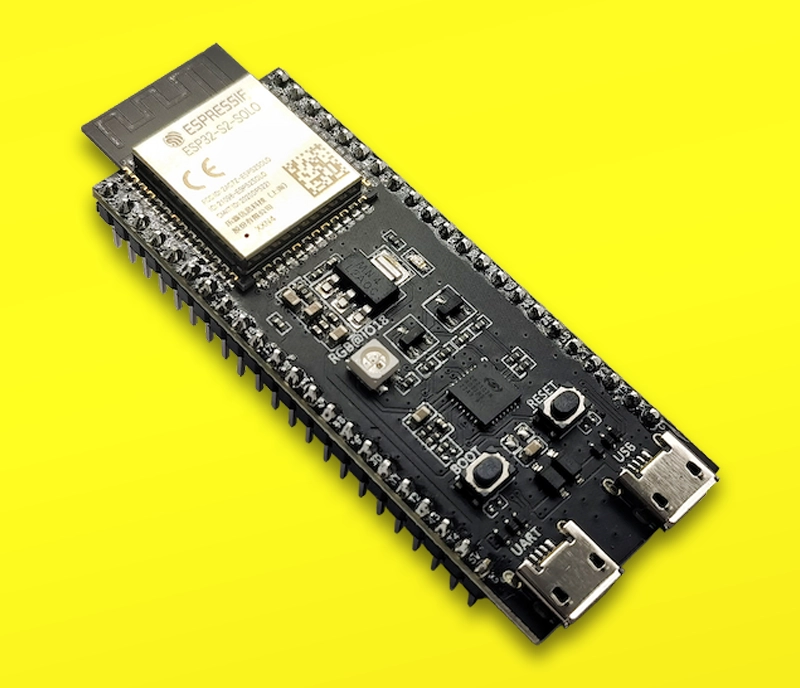
The ESP32-S2-DevKitC-1 is a high-performance development board from Espressif, powered by the Xtensa® 32-bit LX7 single-core processor. Compared to the classic ESP32, the S2 variant introduces native USB support, enhanced touch interfaces, and a higher count of programmable GPIOs. In this guide, we provide a deep dive into every pin and hardware feature of this versatile board.
2. Architecture and Key Components
The board is designed to support the ESP32-S2-SOLO and SOLO-U series modules. A standout feature of the S2 series is its dual-USB port system.
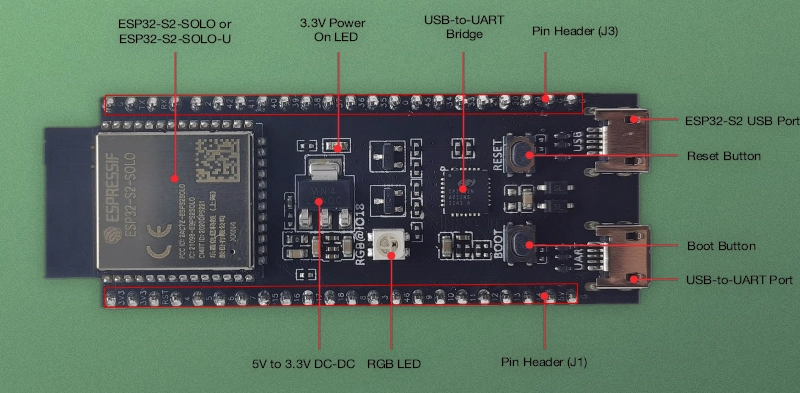
Detailed top-view photo of the board with labels: ESP32-S2 Module, USB-to-UART Port, ESP32-S2 USB Port, RGB LED, Boot/Reset Buttons]
3. Comprehensive Pinout Table
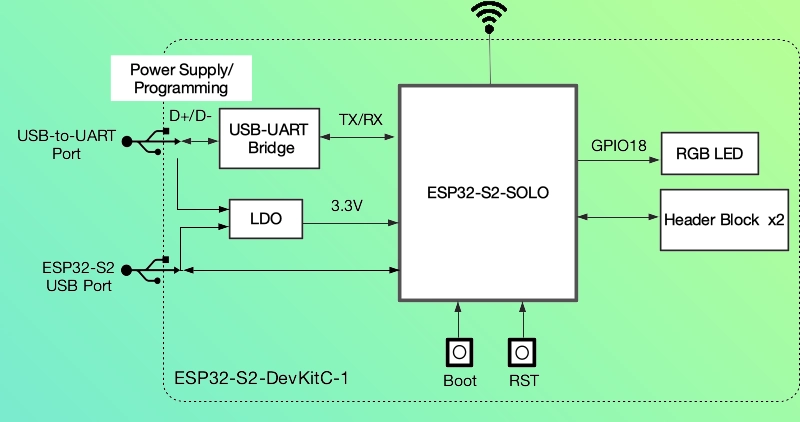
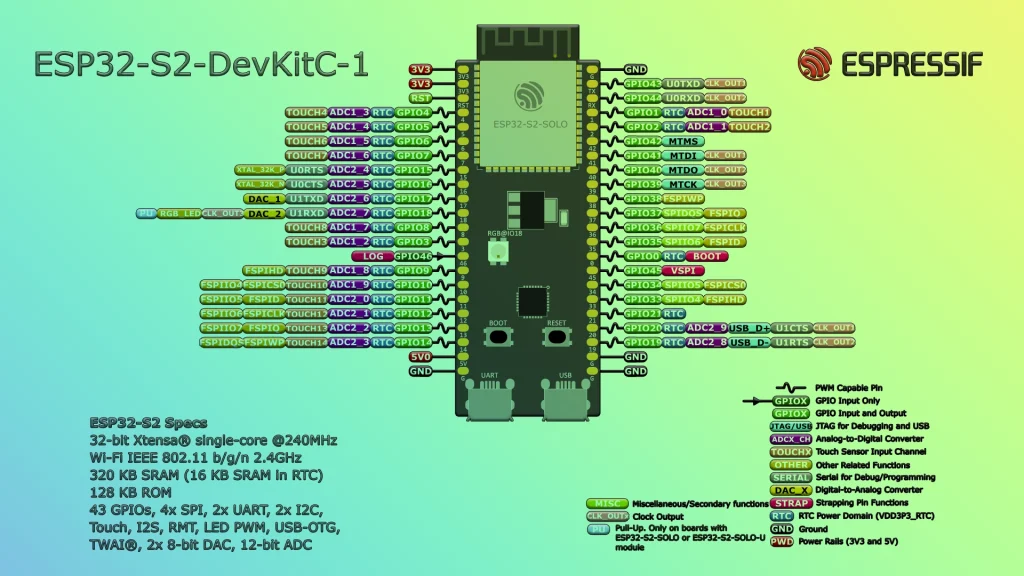
Original Pinout Diagram from Espressif documentation]
Below is the complete list of pins, categorized by their primary and alternative functions.
Header J1 (Left Side)
| Pin | Name | Type | Full Functionality & Alternative Modes |
| 1, 2 | 3V3 | P | Internal LDO output or 3.3V power input. |
| 3 | CHIP_PU | I | Reset (High = Enabled, Low = Reset). Pulled high to 3.3V. |
| 4 | GPIO4 | I/O | RTC_GPIO4, TOUCH4, ADC1_CH3. |
| 5 | GPIO5 | I/O | RTC_GPIO5, TOUCH5, ADC1_CH4. |
| 6 | GPIO6 | I/O | RTC_GPIO6, TOUCH6, ADC1_CH5. |
| 7 | GPIO7 | I/O | RTC_GPIO7, TOUCH7, ADC1_CH6. |
| 8 | GPIO15 | I/O | RTC_GPIO15, U0RTS, ADC2_CH4, XTAL_32K_P (External Crystal). |
| 9 | GPIO16 | I/O | RTC_GPIO16, U0CTS, ADC2_CH5, XTAL_32K_N. |
| 10 | GPIO17 | I/O | DAC_1 (Digital-to-Analog), RTC_GPIO17, U1TXD, ADC2_CH6. |
| 11 | GPIO18 | I/O | Integrated RGB LED, DAC_2, U1RXD, ADC2_CH7. |
| 12 | GPIO8 | I/O | RTC_GPIO8, TOUCH8, ADC1_CH7. |
| 13 | GPIO3 | I/O | RTC_GPIO3, TOUCH3, ADC1_CH2. |
| 14 | GPIO46 | I | Note: This pin is Input Only. |
| 15-20 | 9-14 | I/O | FSPI Bus (FSPIQ, FSPICLK, FSPID, FSPICS0). Ideal for SD cards and TFT screens. |
| 21 | 5V | P | 5V Input from USB or external power supply. |
| 22 | GND | G | Ground. |
Header J3 (Right Side)
| Pin | Name | Type | Full Functionality & Alternative Modes |
| 1 | GND | G | Ground. |
| 2 | TX | I/O | U0TXD, GPIO43, main data transmission channel. |
| 3 | RX | I/O | U0RXD, GPIO44, main data reception channel. |
| 4 | GPIO1 | I/O | RTC_GPIO1, TOUCH1, ADC1_CH0. |
| 5 | GPIO2 | I/O | RTC_GPIO2, TOUCH2, ADC1_CH1. |
| 6-9 | 42-39 | I/O | JTAG Interface (MTMS, MTDI, MTDO, MTCK) for hardware debugging. |
| 10-13 | 38-35 | I/O | Additional FSPI lines (WP, Q, CLK, D). |
| 14 | GPIO0 | I/O | Boot Pin. Hold down during startup to enter Flash Mode. |
| 15 | GPIO45 | I/O | General Purpose I/O. |
| 16, 17 | 34, 33 | I/O | Lines for external SPI Flash / PSRAM communication. |
| 18 | GPIO21 | I/O | RTC_GPIO21. |
| 19 | GPIO20 | I/O | USB D+ (Internal USB data line). |
| 20 | GPIO19 | I/O | USB D- (Internal USB data line). |
| 21, 22 | GND | G | Ground. |
4. Power Specifications and Safety
The DevKitC-1 offers flexibility in power delivery but requires careful handling:
5. Developer Notes for AndiBond Lab Projects
When porting your projects (e.g., Dino Run or 3D engines) from the original ESP32 to the S2, keep these differences in mind:
6. References & Legal Notice
This technical manual is developed based on the official documentation provided by Espressif Systems. We highly recommend referring to the primary source for the most recent updates regarding hardware revisions and detailed specifications.
Disclaimer: ESP32 and ESP32-S2 are registered trademarks of Espressif Systems (Shanghai) Co., Ltd. This guide is an independent technical review and is not an official publication of Espressif Systems.